

How It Works
Before Your First Pump-Out on a Greenville Lot
Bought a rural place in Greenville and don't know much about the system? Five things are worth finding out before the truck comes:
| What to find | Where to look | Why it helps |
|---|---|---|
| Tank size and install date | The Outagamie County permit file, under both the Village and the Town of Greenville | Tells you how much the tank holds and roughly how old it is |
| System type | The same permit file, or an alarm panel on the house or a post in the yard | A mound or at-grade system has a pump chamber that gets pumped too |
| Lid location | The permit drawing, a low spot in the lawn, or the line where the sewer pipe leaves the basement wall | Buried lids have to be dug out before pumping can start |
| Last pump-out date | Old receipts from the seller, or the county's maintenance record | Tells us whether solids may be packed hard at the bottom |
| Truck access | A clear path from the driveway to the tank | Long hose runs across a big lot take extra setup |
If you can't find some of it, book anyway. Greenville septic tank pumping is the visit where we measure the sludge, open every lid and fill in what the file left out.
Owner Tips
How to Make Each Pump-Out Easier
The simplest visit is routine septic tank pumping on a system that's been looked after. The expensive repairs, such as drain field replacement, almost always follow years of skipped pumping.
- Pump on time. The state's trigger is a tank one-third full of sludge and scum (SPS 383.54); we measure both layers at every visit so you know how close you are.
- Add risers. Lids brought up to the surface mean no digging on any future visit, even in snow.
- Combine visits. Book your pumping and the county's three-year inspection together, so one visit covers both.
- Protect the drain field. No wipes, grease or harsh chemicals; spread out laundry loads; keep vehicles off the field. EPA SepticSmart has more tips.
Local Context
Greenville's Growth and Its Septic Systems
Greenville became a village on January 12, 2021, after a November 2020 referendum (Wisconsin Municipal Data System, Village of Greenville incorporation), and the remaining western half of the former town joined the village later that year. Parts of Greenville are served by sanitary sewer, but many homes outside the sewered areas, especially on larger rural lots, rely on private systems. Older permits and pumping records for those systems will usually be filed under the Town of Greenville, so search both names when you look up your history.
Greenville is large for a village: about 35.8 square miles, with 12,687 residents at the 2020 census (Wikipedia: Greenville). On its rural lots, the soil decides what kind of system a home can have. The USDA's Manawa series, a clayey-till soil with acreage mapped in Outagamie County, is somewhat poorly drained, with a perched water table 1 to 2.5 feet below the surface for part of the year (USDA NRCS, Manawa series). On soil like that, a lot may need a mound or at-grade system rather than a conventional trench, and the permit file tells you which one you have. If you've bought one of Greenville's older rural properties, the Outagamie County permit file is the quickest way to learn the tank's size and installation date before your first Greenville septic tank pumping.
Greenville septic tank pumping is reported to Outagamie County Development & Land Services, which administers the county's sanitary system rules (Outagamie County Land Use, Zoning, and Sanitary), and the county's reminder letter comes when the system is due (Wisconsin DSPS).

Nearby Areas
Over the Village Line
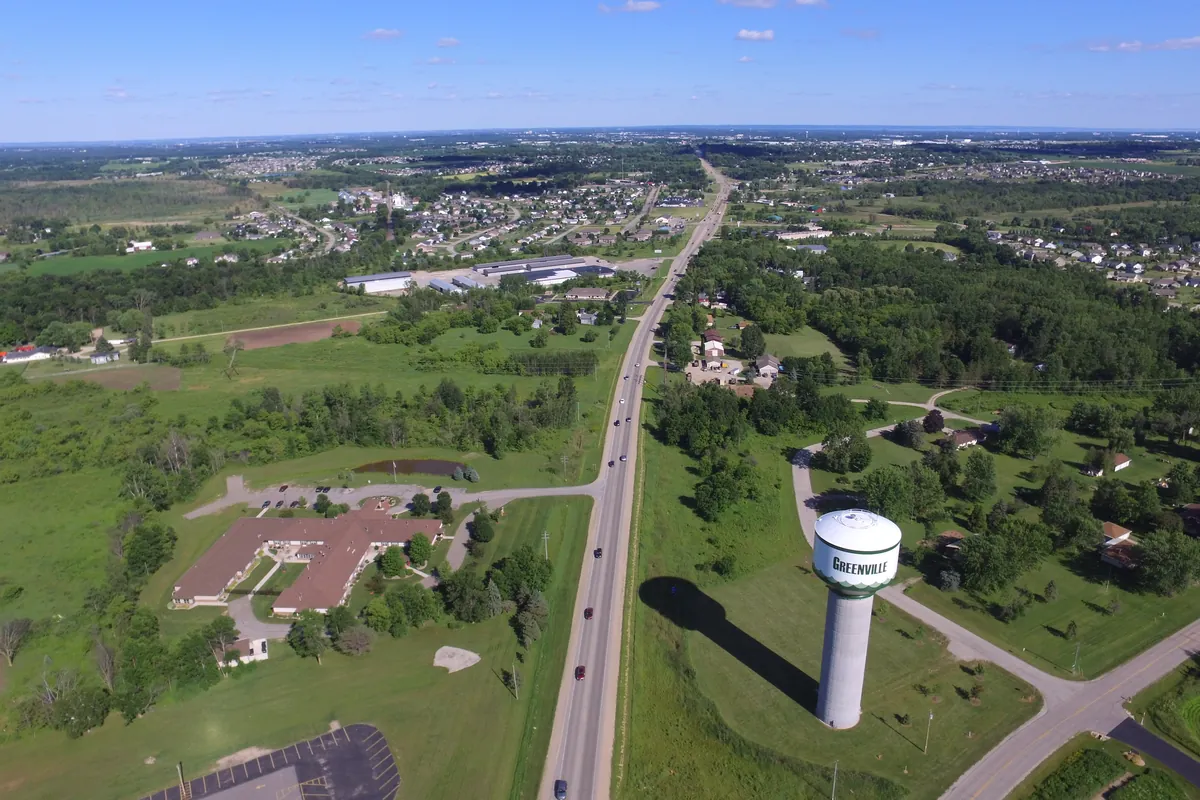
We pump tanks across Greenville's borders too: southeast in Grand Chute, where we also run emergency calls, and toward Appleton. On a holding tank instead? Our holding tank pumping page covers pump-outs on a fixed schedule.
FAQ
Greenville Septic Tank Pumping FAQ
How do I find out how big my Greenville septic tank is?
Start with the Outagamie County permit file; older systems may be filed under the Town of Greenville rather than the village. If the file is missing or vague, tell us when you book, and we'll note the tank's size on your findings once it's open and pumped.
How often should I pump?
When the solids reach a third of the tank. The county's three-year letter asks for an inspection, and pumping only becomes part of it if the tank measures that full, though plenty of owners pump at that visit anyway (Wisconsin DSPS). A large family on a small tank may get there sooner.
Do I need to be home?
Not for a routine visit. Mark the lids or tell us where they are when you book, and the written findings come to you afterwards.
Who files the pumping report with Outagamie County?
We do, once the tank is pumped. State code wants it with the county within 30 days of the work (SPS 383.55).
Do additives mean I can pump less often?
No. Additives don't remove solids. Only pumping does.