
How It Works
How Fox Valley Septic System Installation Works
1. Soil evaluation
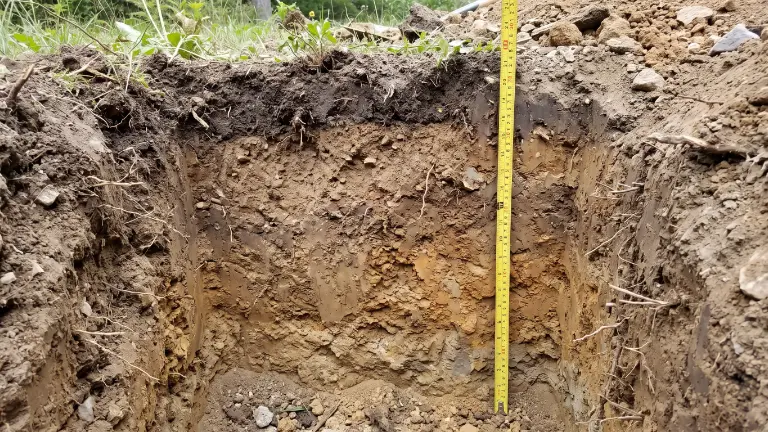
A certified soil tester examines the soil in test pits and borings, recording texture, colour and the depth to groundwater or bedrock (SPS 385). The results decide which system the lot can take.
2. Choosing the system
- Conventional in-ground: where soil is deep and drains at the right rate.
- At-grade or mound: shallow soil, slow or fast drainage, or high groundwater. A mound raises the treatment bed above the native soil (EPA mound fact sheet).
- Holding tank: only where no treatment system will work.
Two code rules often decide the choice. The infiltrative surface has to sit at least 24 inches above the highest estimated groundwater and above bedrock (SPS 383.44), which is why a mound is built up on sand where the native soil is too shallow or wet. And the system has to fit the lot: a drain field or mound at least 10 feet from the house, 5 feet from a property line and 50 feet from a lake's or stream's ordinary high-water mark, and a septic tank at least 5 feet from the house and 2 feet from a property line (SPS 383.43, Table 383.43-1). Distances from any well are set separately by the DNR's well code (NR 812.08).
3. Design and sanitary permit
The system is sized to the home's bedroom count and the soil report. Under SPS 383.21, a sanitary permit and plan approval are required before installation starts, and the application names the licensed master plumber or master plumber-restricted service responsible for the work.
4. Installation and inspection
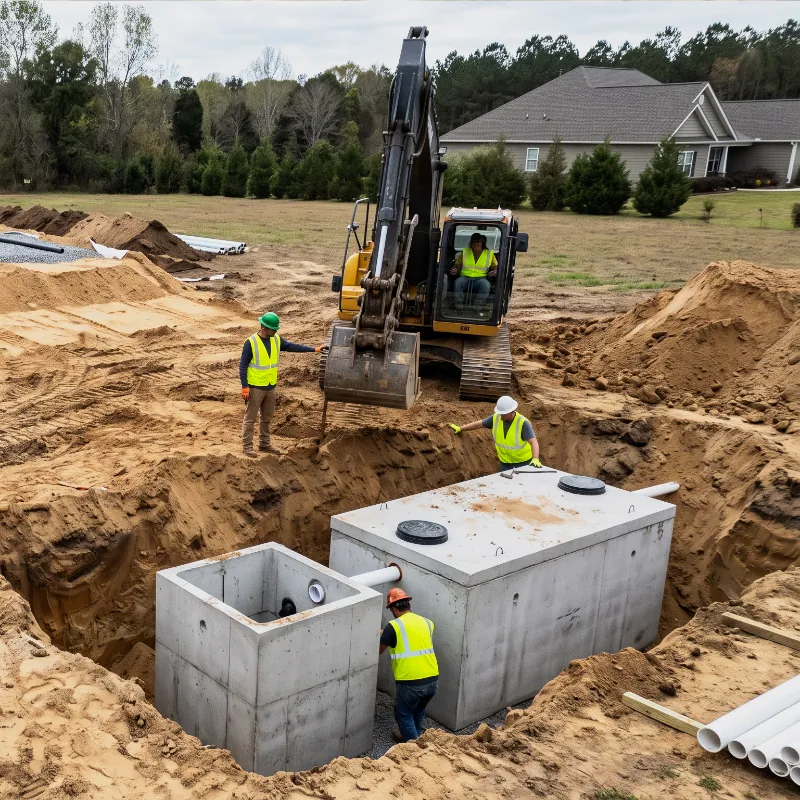
We set the tank, any pump chamber and the drain field or mound, the county inspects the work, and we finish grading and seeding.
5. Maintenance from day one
Every new system joins your county's maintenance program, must be inspected at least once every three years (Wisconsin DSPS; the three-year rule explained) and is serviced on the schedule in its management plan (SPS 383.54). You get the management plan at handover.
Local Rules
Who Issues the Permit in Your County
| County | Office | Source |
|---|---|---|
| Brown | Planning & Land Services, Zoning Division | Brown County Code, Chapter 11 |
| Outagamie | Development & Land Services | Land Use, Zoning, and Sanitary |
| Winnebago | Zoning Department | Sanitary System Information |
| Calumet | Planning, Zoning & Land Information | Sanitation |
Outagamie County, for example, requires a sanitary permit before any construction begins. Check first whether your lot is inside a sewer service area; if it is, you may have to connect instead.
Replacement
When a System Needs Replacing
Replacement is the answer when the drain field or mound itself has failed, not just a part. The EPA notes that drain fields older than 25 to 30 years may fail as the soil beneath them clogs, while pumps and controls often need replacing every 10 to 20 years (EPA septic FAQ). We check whether a septic repair will do before recommending a new system.
Replacement follows the same steps as new construction, plus abandoning the old tank properly. If the county has issued an order to correct a failing system, we work to its deadline.
Typical Costs
What Does a New Septic System Cost in Wisconsin?
A new or replacement septic system in Wisconsin typically costs $5,000 to $25,000 installed, and the type of system your soil allows decides more of that number than anything else.
| System type | Typical Wisconsin installed range |
|---|---|
| Conventional gravity (in-ground) | $5,000 to $15,000 |
| In-ground pressure | $7,000 to $20,000 |
| Mound | $10,000 to $25,000, more on difficult sites |
SepticSeeker's 2026 replacement guide puts conventional gravity systems at $5,000 to $15,000 and pressure-dosed systems at $10,000 to $20,000 (SepticSeeker), and Fixr's guide starts pressure distribution at about $7,000 (Fixr). Angi puts mounds at $10,000 to $20,000 (Angi), and a 2026 Wisconsin budget guide says mounds here often run past $15,000 to $25,000 (Coulee Land Company). Mound and at-grade systems cost more than conventional ones because of the pump, the controls and, for mounds, the sand trucked in to build the bed. See mound system repair for more on mounds.
Soil testing and permits
Before any digging, there's the paperwork side of Fox Valley septic system installation. A soil evaluation by a certified soil tester typically runs $250 to $1,000 in Wisconsin (LatestCost Wisconsin guide). The county sanitary permit is one of the few fixed numbers, because counties publish their fees:
| County | Sanitary permit, new system | Plan approval | Septic tank replacement only |
|---|---|---|---|
| Outagamie (2026) | $675 gravity; $800 in-ground pressure; $825 at-grade or mound; $950 holding tank | $225 pressurized systems; $150 holding tank | $200 |
| Calumet | $500 for any POWTS or holding tank, including the $100 state fee | $250 mound, at-grade or pressure; $100 conventional or holding tank (one- and two-family homes) | $250 |
Sources: Outagamie County 2026 fee schedule; Calumet County sanitary application. Brown and Winnebago counties set their own fees; check with the offices listed under Who Issues the Permit in Your County. Outagamie doubles its fees if work starts before the permit is issued.
What moves the price
- The soil report. Shallow soil, high groundwater or bedrock can rule out a conventional system and call for a mound.
- Getting equipment in. Tight lots, trees and stumps in the way, and long pipe runs add machine time.
- Winter. Frozen ground makes testing and digging slower and harder.
- The old system. A replacement includes pumping the old tank and abandoning it properly.
- Tank only. If only the tank has failed and the drain field is sound, the job is far smaller, and so is the permit.
These are typical Wisconsin figures from published cost guides and county fee schedules, not our price list. The actual cost of Fox Valley septic system installation depends on your soil and your site, so it's worked out after the soil evaluation and confirmed with you before construction starts.
The state's Wisconsin Fund grant is no longer funded (Wisconsin DSPS), so Fox Valley septic system installation has no state grant to plan around; ask your county whether any local help exists.
Service Area
Fox Valley Septic System Installation by Location
- Buchanan septic installation: sewer district checks and Outagamie County permits.
- Fox Crossing septic services: new construction on the village's edges.
- Neenah mound system repair: when a mound needs replacing in Winnebago County.
FAQ
Septic Installation FAQ
How long does it take to install a septic system?
Expect several weeks for the soil test, design, plan review and permit. Once those are in hand, the dig and install usually take a few days, depending on weather and the county inspection.
Can I install my own septic system in Wisconsin?
No. The permit application must name a licensed master plumber or master plumber-restricted service responsible for the installation (SPS 383.21).
What if my soil won't take a conventional system?
An at-grade or mound system is usually the next option. A holding tank is used only when no treatment system fits the site.
Can installation happen in winter?
Frozen ground makes soil testing and digging harder, so most projects are planned for the unfrozen months. Ask us about your timeline.