
The Basics
What Is a POWTS?
A private onsite wastewater treatment system (POWTS) is Wisconsin's term for any system that treats or holds wastewater on the property instead of sending it to public sewer: conventional septic tanks and drain fields, mounds, at-grade systems, holding tanks and pretreatment units.
Why It Matters
Why POWTS Inspections Are Required
- State law. Each county must inventory its systems and run a maintenance program covering all of them (Wis. Stat. 145.20).
- Three-year minimum. A septic system must be inspected at least once every three years (Wisconsin DSPS), and the tank pumped when sludge and scum reach one-third of its volume (SPS 383.54). Pumping every three years is not a state requirement. Our guide to the three-year rule covers the details.
- Statewide tracking. Since October 1, 2019, every POWTS has been on a county maintenance tracking program; counties mail notices and follow up on delinquent properties (Wisconsin DSPS).
- Consequences. A POWTS not maintained to its management plan is considered a human health hazard under state code.
Who can inspect
Licensed master or journeyman plumbers (including restricted licences), certified POWTS inspectors, registered POWTS maintainers and certified septage servicing operators. Elite Septic Fox River is licensed to pump, inspect and service POWTS in Wisconsin.
What's Included
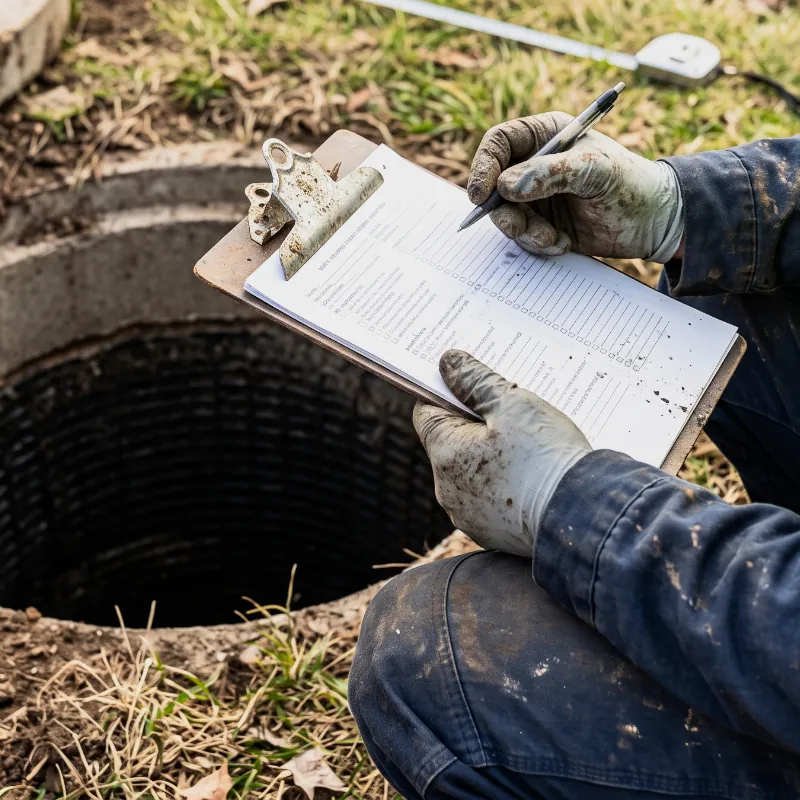
What Our POWTS Inspections Cover
| Component | Checked for |
|---|---|
| Records | County permit, system type, tank size, last service date |
| Septic tank | Sludge and scum depth (pump if one-third full), cracks, leaks |
| Baffles and tees | Present, attached, not corroded |
| Effluent filter | Cleaned, intact |
| Pump chamber (mound, at-grade) | Pump operation, float switching, alarm function |
| Holding tank | Level, alarm, servicing contract status |
| Soil absorption area | Ponding, odour, unusual growth, erosion, seepage |
| Lids and risers | Sound, secured, child-safe |
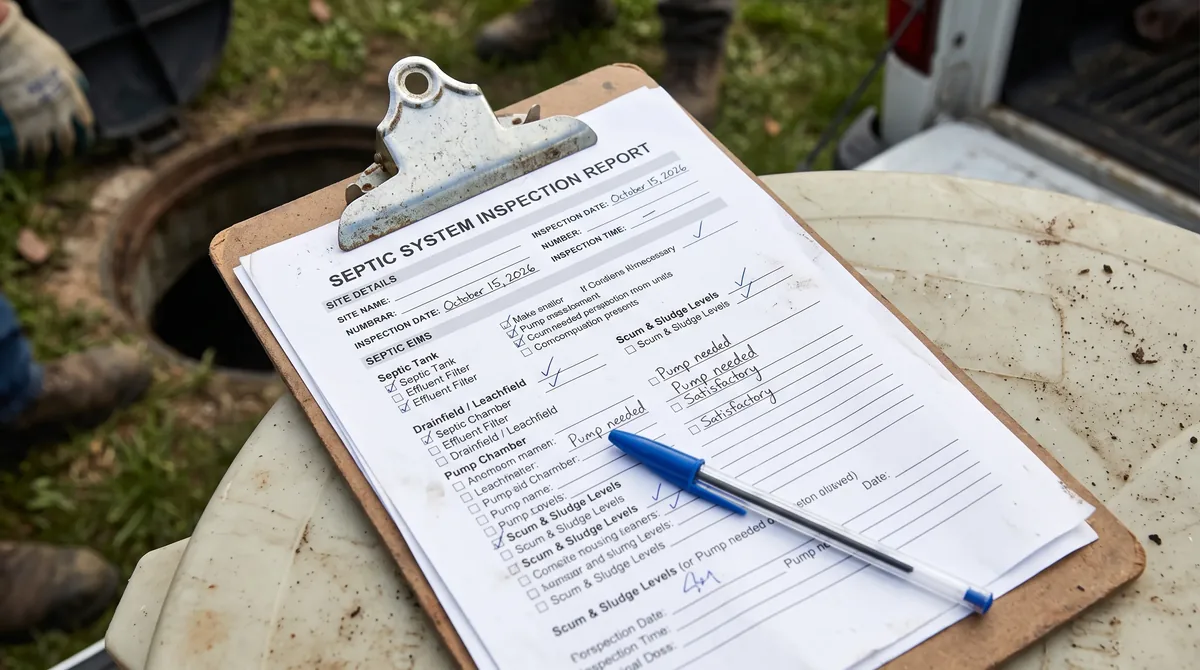
You get written findings in plain language, and we file the county report.
When an inspection turns up a need for pumping or a repair, that work is priced as a separate step, and you approve it before we carry on.
Typical Costs
What Do POWTS Inspections Cost in Wisconsin?
A routine septic inspection usually costs a few hundred dollars. We couldn't find a published Wisconsin average, so the closest guide is national: Angi puts an annual inspection at about $200 to $250 and a detailed one, the kind often ordered for a home sale, at about $400 to $700 (Angi).
| Item | Typical figure |
|---|---|
| Routine maintenance inspection | About $200 to $250 (national) |
| Detailed inspection, e.g. for a home sale | About $400 to $700 (national) |
| Pumping, if the tank is one-third full | $250 to $600 in Wisconsin; see septic tank pumping |
| Outagamie County POWTS fee | $13 per system per year (2026 fee schedule) |
The county fee is separate from what you pay the inspector; other counties set their own.
What moves the price:
- Buried lids that have to be dug out before anything can be checked.
- The system type. A mound or at-grade system adds a pump chamber, floats and an alarm to test; a holding tank adds an alarm check.
- Whether pumping is due. That's a separate charge, and it only applies if sludge and scum have reached one-third of the tank.
These are typical figures from published cost guides and county fee schedules, not our price list. The cost of POWTS inspections on your property depends on the system and access, and we confirm it with you before the visit.
Buying or Selling
Inspections for Home Sales
Wisconsin has no single statewide rule requiring a septic inspection at sale, but sellers of most one- to four-family homes must give buyers a Real Estate Condition Report that asks about known septic defects (Wis. Stat. ch. 709). A disclosure isn't an inspection, so many buyers make one a condition of their offer, and many sellers order one before listing. Our page on home-sale septic inspections in Kimberly has tips for both sides.
Local Rules
How Each County Handles Reporting
| County | Program office | Notes |
|---|---|---|
| Brown | Planning & Land Services, Zoning Division | Forms online (Brown County) |
| Outagamie | Development & Land Services | Administers sanitary systems (Outagamie County); owner or owner's agent reports within 30 days (SPS 383.55) |
| Winnebago | Zoning Department | Three-year inspection/service, including filter cleaning (Winnebago County) |
| Calumet | Planning, Zoning & Land Information | Records searchable in Ascent (Calumet County) |
Service Area
POWTS Inspections by Location
Each local page covers that community's county program and common questions:
- Kaukauna septic inspections: Outagamie County's three-year notice.
- Kimberly septic and POWTS inspections: inspections for home sales.
- Bellevue POWTS inspections: responding to a Brown County notice.
- Allouez septic system maintenance: staying ahead of the schedule.
- De Pere septic tank services: maintenance plans and repairs.
- Appleton septic services: a city in three counties.
FAQ
POWTS Inspections FAQ
Does every inspection include pumping?
No. Pumping is required only when sludge and scum reach one-third of the tank, though many owners pump at three years anyway.
I didn't get a notice. Am I still due?
Yes, if three years have passed since the last reported service. The requirement applies whether or not a letter arrives.
How long does an inspection take?
Usually one visit. Allow more time if lids are buried or pumping is needed. Risers bring buried lids up to grade for next time.
Can a home inspector do it?
A general home inspection usually doesn't open the tank or test a mound pump. A POWTS inspection must be done by one of the qualified professionals listed above.
What if the system fails?
We explain what failed and what fixing or replacing it would involve, including the cost, before anything is done.
Why won't the county accept my receipt?
A maintenance report has to show the system's identifying number and location, the date of the work, and the licence, certification or registration number of whoever did it (SPS 383.55). A receipt usually leaves those out. We file a complete report for you.