
The Basics
How a Mound System Works
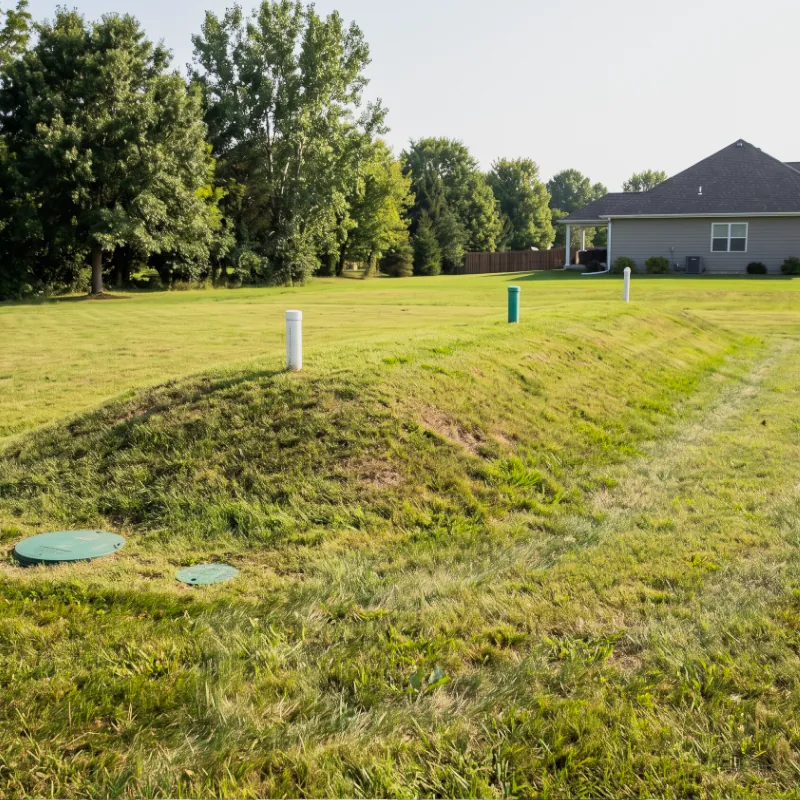
Mounds are used where the native soil can't treat effluent by itself, because it drains too slowly or too fast, or groundwater or bedrock is too close to the surface. The EPA describes a mound as a pressure-dosed sand filter that discharges to the natural soil below (EPA mound systems fact sheet).
A mound has three parts, and each can fail:
- Septic tank. Settles out solids; an effluent filter on the outlet keeps fine solids back.
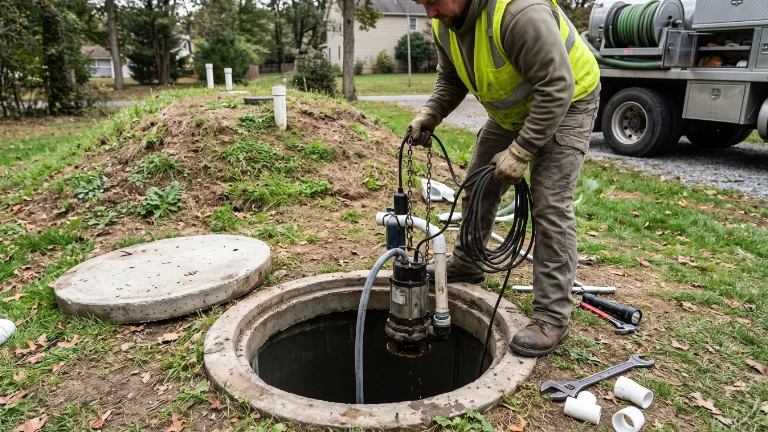
- Dosing chamber. A pump, controlled by floats, sends measured doses of effluent to the mound. A high-water alarm warns when the level rises too far.
- The mound. Pressurised perforated laterals spread effluent across a bed of sand built above the natural ground, covered with soil and grass.
At-grade systems work the same way without the raised sand bed, and we repair them too.
Our Services
Mound Problems and Their Fixes
| Symptom | Likely cause | Repair |
|---|---|---|
| Alarm sounding | Failed pump, stuck float, tripped breaker, control fault | Test circuit, floats and pump; replace failed part |
| Pump runs constantly | Float failure, leak into the chamber, groundwater infiltration | Replace float; locate and seal leak |
| Seepage on the side or toe of the mound | Clogged laterals, uneven dosing, solids carry-over | Flush laterals, adjust dosing, fix the upstream fault |
| Odour near the mound | Cracked lid or riser, vent problem, surfacing effluent | Replace lid or riser; investigate surfacing |
| Sunken or eroded areas | Vehicles, animals, settling | Repair cover, regrade, protect from traffic |
| Persistent wet, failed mound | Clogged sand bed or native soil interface | Mound replacement under a new sanitary permit |
Most of these fixes can't be priced over the phone, because one symptom can point to several different causes. We test first, then tell you what the fix will cost.
Typical Costs
What Does a Mound System Cost in Wisconsin?
Building a new or replacement mound in Wisconsin typically costs $10,000 to $25,000, and a difficult site can push it higher. Angi puts mounds at $10,000 to $20,000 (Angi), and a 2026 Wisconsin budget guide says mounds here often run past $15,000 to $25,000 (Coulee Land Company). Fixing a pump, float or lateral is a much smaller job than that, priced once we've tested the system.
| Item | Typical figure |
|---|---|
| New or replacement mound, installed | $10,000 to $25,000, more on difficult sites |
| Outagamie County sanitary permit, mound | $825, plus $225 plan approval |
| Calumet County sanitary permit, any POWTS | $500 including the $100 state fee, plus $250 plan approval for a mound |
Permit sources: Outagamie County 2026 fee schedule; Calumet County sanitary application. Brown and Winnebago counties publish their own fees.
What moves the price of a mound:
- How much sand it needs. The bed has to lift the infiltrative surface at least 24 inches above groundwater or bedrock (SPS 383.44), so a wetter or shallower site needs more sand trucked in.
- The dosing equipment. A pump chamber, pump, floats, control panel and alarm all go in with a new mound.
- Slope and access. Room for trucks and machines, and a lot that isn't level, change how long the build takes.
- Removing the old system. A replacement includes pumping and properly abandoning the old tank if it isn't reused.
These are typical Wisconsin figures from published cost guides and county fee schedules, not our price list. A mound's actual cost depends on the soil report and the site, and we confirm it with you before construction or any mound system repair starts.
How It Works
Our Mound System Repair Process
- Diagnose. Pump the tank and dosing chamber, test the pump, floats and alarm, check the effluent filter, and inspect the laterals and mound surface.
- Explain. What we found, how it can be fixed and what each option costs, before work begins.
- Permit if needed. Pump, float and filter replacements usually don't need a sanitary permit; replacing the mound does. We prepare the paperwork for the county.
- Repair and test. Watch a full dose cycle and confirm the alarm resets.
- Report. File the service with your county's maintenance program.
Prevention
Maintenance That Prevents Mound Repairs
Under Wisconsin's standard mound management plan, the effluent filter gets a check and the laterals get flushed on a three-year cycle, or sooner as needed (Wisconsin DSPS mound management checklist). That plan sits on top of the county's three-year inspection cycle (Wisconsin DSPS; the three-year rule explained). Regular pumping keeps solids out of the mound; solids carried over from the tank are a common reason a mound system repair turns into a replacement.
Service Area
Mound System Repair by Location
We repair mounds throughout the Fox Valley. These local pages cover the county rules and common issues in each area:
- Neenah mound system repair: Winnebago County's delegated plan review for mound replacements.
- Suamico mound system pumping and repair: pump chamber service and lateral flushing in Brown County.
- Oshkosh septic repair: pump, baffle and drain field repairs in Winnebago County.
- Ashwaubenon septic repair: commercial and residential systems.
- Little Chute emergency septic repair: alarms and pump failures that can't wait.
- Buchanan septic installation: when a mound has to be replaced or built new.
FAQ
Mound System Repair FAQ
What changes the cost of a mound pump replacement?
The pump model your system's design calls for, whether the floats or control panel need replacing at the same time, and how easy the dosing chamber is to reach. A tired pump caught at a routine visit is also a simpler job than one that failed and flooded the chamber.
Can a wet mound be saved?
Often, if the cause is upstream: a failed baffle, a skipped pump-out or a dosing problem. If the sand and soil interface is clogged throughout, replacement is the only fix.
How long does mound replacement take?
Soil evaluation, design, permit and plan review come first and can take weeks. Construction itself usually takes days, weather permitting.
Is there funding for replacement?
Not from the state right now: the Wisconsin Fund grant has had no funding since it sunsetted, so DSPS isn't taking applications (Wisconsin DSPS). Ask your county about any local programs.
Should I turn off the alarm if it keeps going off?
No. Silence it if your panel allows, but leave the circuit on, cut water use and call us.