
The Basics
Why Your Yard Has a Hill in It
Septic effluent has to pass through enough dry soil to get cleaned up before it reaches groundwater or bedrock. Wisconsin code says the surface where effluent soaks in has to sit at least 24 inches above the estimated highest groundwater level and above bedrock (SPS 383.44).
Plenty of lots can't give you that. Groundwater rises close to the surface in spring, bedrock sits shallow, or the soil drains too slowly or too fast. A mound gets around it by building the missing soil on top of the ground instead of digging down.
It's a homegrown design. The EPA's fact sheet says the mound in most common use today was adapted at the University of Wisconsin-Madison in the early 1970s from an older North Dakota design (EPA mound fact sheet). That's why installers still call it a Wisconsin mound.
How It Works
How a Mound Septic System Works, Stop by Stop
The easiest way to see how a mound septic system works is to follow one flush from the bathroom to the ground.
Stop 1: The septic tank
Solids sink and become sludge. Grease floats and becomes scum. The liquid in the middle moves on, often through an effluent filter on the outlet. This tank protects the whole mound. Any sludge that gets past it is headed for the sand.
Stop 2: The pump chamber
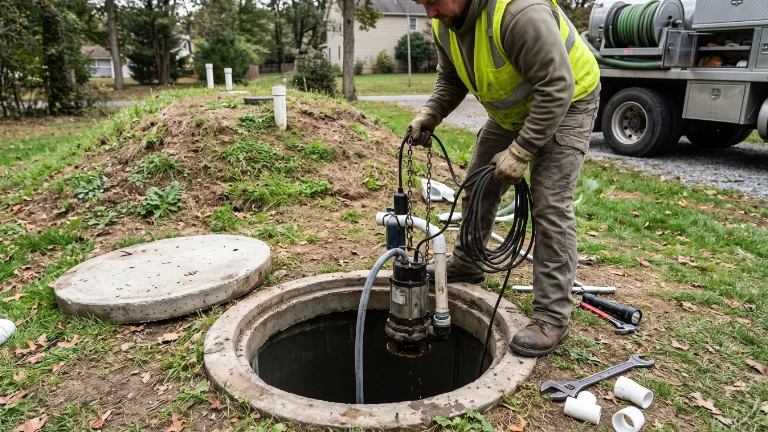
The liquid collects in a second tank, the dosing or pump chamber. Floats tell the pump when to run, so effluent goes to the mound in measured doses instead of a trickle all day. A higher float runs the high-water alarm. If yours is sounding now, read what to do when your septic alarm goes off.
Stop 3: The pipes in the mound
Small perforated pipes called laterals lie in a layer of gravel near the top of the mound. Pump pressure pushes each dose along the full length of every pipe, so the whole bed gets used.
Stop 4: The sand and the native soil
Below the gravel is coarse sand that has to meet grain-size specs, and most of the treatment happens there. Under the sand is your original ground. When the mound was built, the topsoil was left in place and plowed before the sand went on, so effluent can move into it (EPA). A soil cap and grass on top keep the mound from washing away.
Owner Tips
Mound Care: Do's and Don'ts
Knowing how a mound septic system works makes the rules make sense. Almost every one protects either the pump or the sand.
Do
- Keep a full cover of grass and mow it. The EPA recommends grass or other cover to stop erosion and take up water (EPA).
- Get the tank pumped when it needs it. That means once sludge and scum fill a third of the tank (SPS 383.54), plus whatever the mound's management plan calls for; the three-year deadline is for an inspection (Wisconsin DSPS; the three-year rule explained). See our septic tank pumping page.
- Send water away from it. Point downspouts and sump discharge elsewhere (EPA).
- Spread out laundry and fix leaks. Overloading is a known way to kill a mound. The EPA's fact sheet describes a Wisconsin business mound that failed twice from too much water.
Don't
- Drive or park on it, including ATVs and snowmobiles. The EPA lists keeping traffic off the mound as a way to prevent failure.
- Plant trees or shrubs on it. Deep roots go after the pipes.
- Build on it. No sheds, decks, pools or patios.
- Pour in additives or "restorer" products. Wisconsin's standard mound management plan says no product for chemical or physical restoration may be used unless the state has approved it (Wisconsin DSPS mound management plan).
Prevention
Getting a Mound Through a Wisconsin Winter
A mound in steady use usually doesn't freeze. The real danger is one that goes into winter already wet. The University of Minnesota's septic program, which deals with winters like ours, says snow "serves as an insulating blanket" and that compacted snow doesn't insulate as well (University of Minnesota). So:
- Let snow build up on the mound, and keep sleds, snowmobiles and foot traffic off it.
- Don't pile plowed snow on it.
- If the mound was soggy or seeping in fall, get it checked before freeze-up. The same source calls a seeping or ponding mound "a prime candidate to freeze."
- If it freezes, don't add antifreeze or salt, and don't leave a tap running to thaw it. Call us.
Warning Signs
Signs Your Mound Needs a Look
- Wet, spongy spots on the top, the sides or the toe (the low edge)
- The high-water alarm
- A sewage smell near the mound or tanks
- A pump that runs constantly or cycles far more than usual
- Slow drains all through the house
Think back to how a mound septic system works and each sign points to a stop: an alarm or a nonstop pump points at the chamber, slow drains at the tank, wet spots at the pipes or sand. The EPA lists ponding, seepage from the side or toe, and spongy areas as the main mound problems (EPA). A damp toe after a big spring melt can be weather. A wet toe in a dry August is not. Our mound system repair page explains how we find the cause.
Closer to home, Neenah mound system repair covers the Winnebago County side of a rebuild, and Suamico mound system pumping and repair covers pump chamber service in Brown County.
The Basics
How Long Does a Mound Last?
Nobody can honestly give you a set number. The EPA says a properly installed and maintained mound "should last for a long period of time," and that poor maintenance can lead to early failure. Its 1999 fact sheet put the success rate of Wisconsin mounds at over 95%, crediting siting, design, construction and maintenance (EPA).
The answer goes back to how a mound septic system works: the parts age differently. Pumps and controls often need replacing after about 10 to 20 years (EPA FAQ). The sand bed usually dies from solids and grease carried over from a tank that went too long without pumping. That's why tank care matters more on a mound than anywhere else.
A failed mound doesn't always mean a new spot in the yard. The state's standard management plan allows it to be rebuilt in its originally approved area once the failed material is removed (Wisconsin DSPS mound management plan).
FAQ
Mound Questions
Can you plant on a septic mound?
Grass, yes. It's the best cover there is, and mowing it is fine. Keep trees and shrubs off, because their roots go after the pipes. We'd skip vegetable gardens too.
How often does a mound need pumping?
The septic tank and pump chamber get pumped when solids exceed one-third, or as your local ordinance requires (Wisconsin DSPS mound management plan). How fast that happens depends on your household, so we measure instead of guessing.
Read Next